
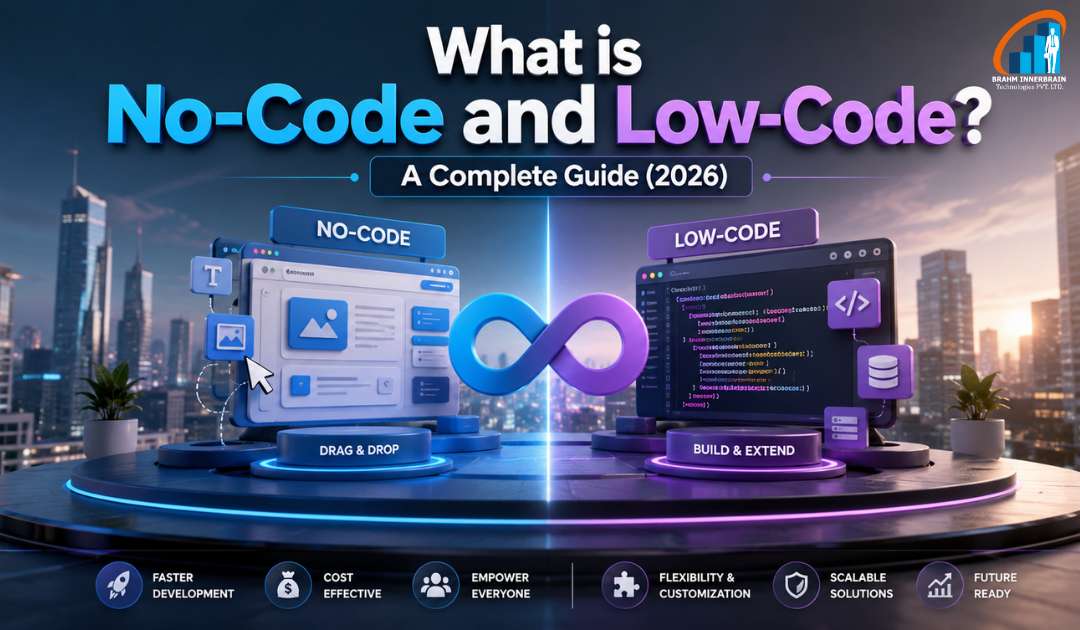
Building software used to mean hiring developers, writing thousands of lines of code, and waiting months for a working product. Today, that’s changing fast. No-code and low-code platforms are making it possible for anyone—developers and non-developers alike—to build apps, websites, and automations in a fraction of the time. In this article, we’ll break down what these platforms are, how they differ, and why they’re becoming essential tools in 2026.
What is Low-Code/No-Code?
No-code and low-code are two approaches to building software that reduce or eliminate the need for traditional programming.
No-code platforms allow users to build applications entirely through visual interfaces—drag-and-drop builders, pre-made templates, and ready-to-use components—without writing a single line of code. They’re designed for non-technical users like business owners, marketers, and designers who want to create something functional quickly.
Low-code platforms also rely on visual development tools, but they give users the option to add custom code when needed. This makes them ideal for developers or technical teams who want to speed up the build process while still having the flexibility to handle complex logic or integrations.
Both approaches share the same core goal: making software development faster, cheaper, and more accessible to a wider range of people.
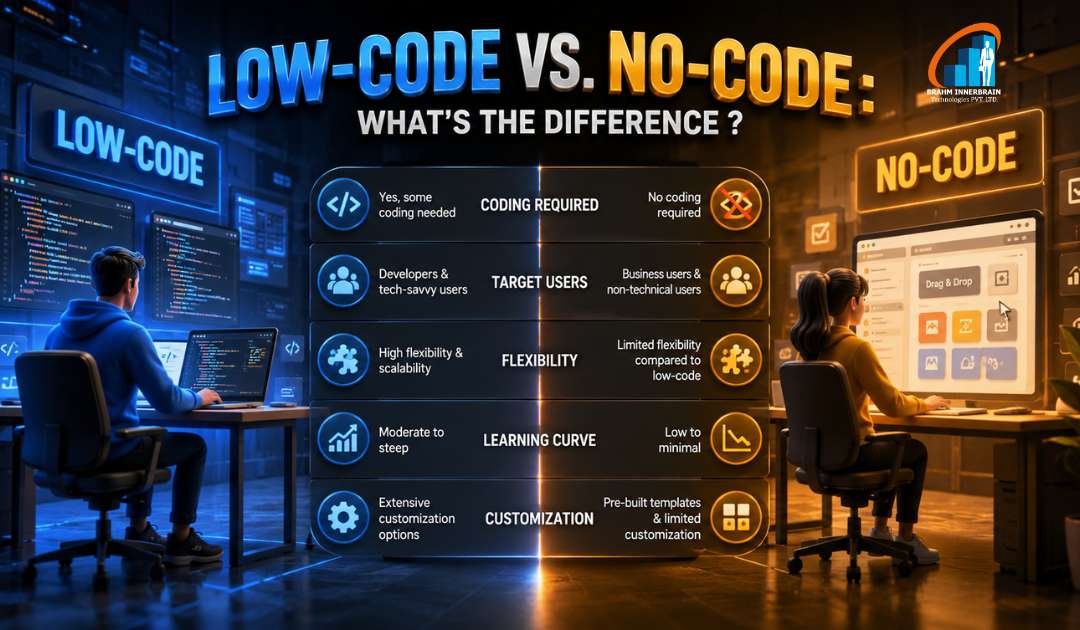
Low-Code vs. No-Code: What’s the Difference?
While the two terms are often used interchangeably, they serve different audiences and purposes.
Coding required: No-Code mein bilkul bhi coding nahi chahiye, jabki Low-Code mein minimal coding ki zarurat padti hai.
Target users: No-Code non-technical users ke liye bana hai, jabki Low-Code developers aur technical teams ke liye design kiya gaya hai.
Flexibility: No-Code limited flexibility deta hai, jabki Low-Code high flexibility offer karta hai.
Learning curve: No-Code seekhna bahut easy hai, jabki Low-Code ka learning curve thoda moderate hota hai.
Best for: No-Code simple apps, websites, aur MVPs banane ke liye best hai, jabki Low-Code complex, enterprise-grade apps ke liye best suited hai.
Customization: No-Code sirf platform ke pre-built features tak hi restricted hota hai, jabki Low-Code custom code ke through extend kiya ja sakta hai.
In short: no-code speed aur simplicity ke liye hai, jabki low-code speed ke saath-saath flexibility bhi deta hai.
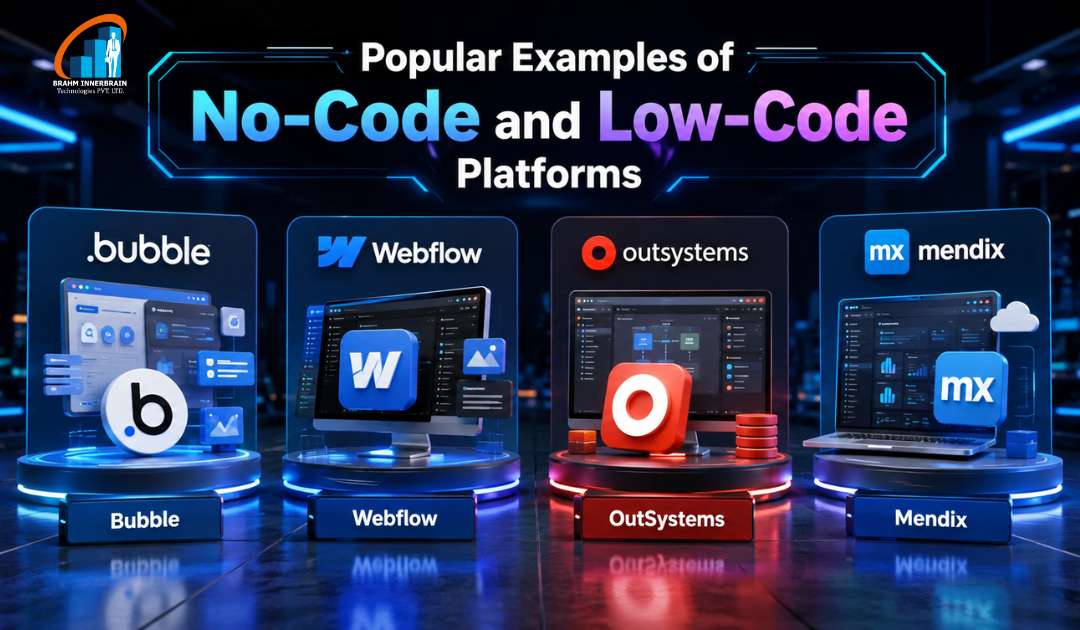
Popular Examples of No-Code and Low-Code Platforms
To understand these platforms better, here are a few well-known examples:
- Bubble – A no-code tool used to build web applications like marketplaces, social platforms, and business tools, all through drag-and-drop design.
- Webflow – A no-code website builder popular among designers and businesses for creating professional, responsive websites without a developer.
- OutSystems – A low-code platform built for enterprises, used to create complex business applications with the option to add custom code.
- Mendix – Another enterprise-grade low-code platform, commonly used for building internal business tools and workflow systems.
These tools show how no-code and low-code solutions cater to different needs—from simple personal projects to large-scale enterprise software.
Why No-Code and Low-Code Are Growing So Fast
The demand for these platforms isn’t just a trend—it’s backed by real numbers. The low-code market is projected to be worth billions of dollars by 2026, with a majority of new applications expected to be built using no-code or low-code tools. A major driver behind this growth is the global shortage of developers, combined with businesses wanting to move faster without waiting on IT teams.
Another key factor is the rise of “citizen developers”—non-technical employees who now build their own apps and tools to solve everyday business problems, reducing dependency on dedicated engineering teams.
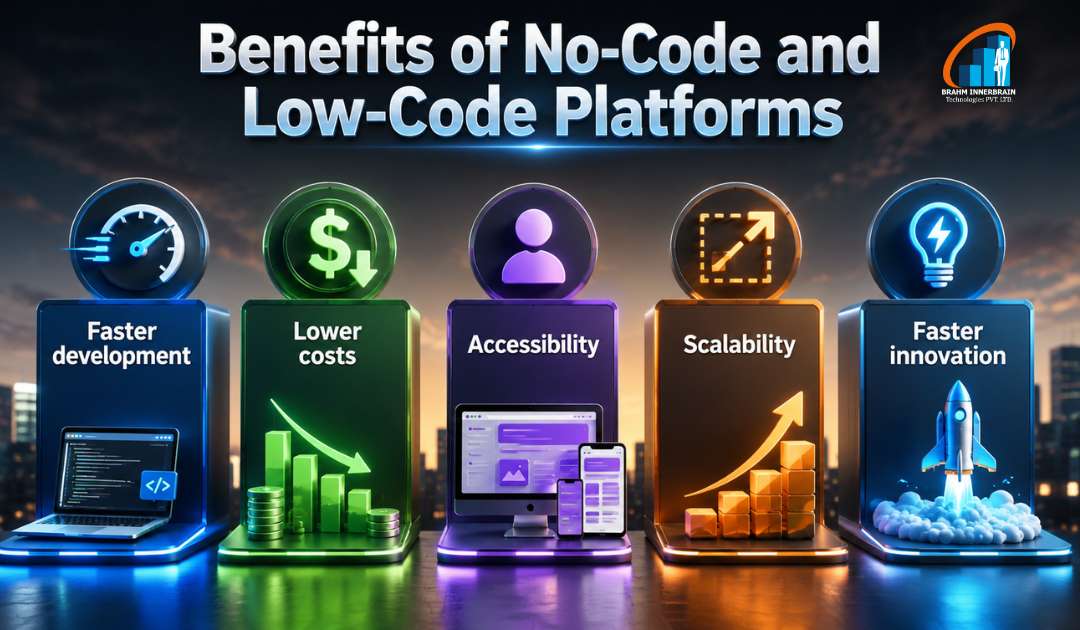
Benefits of No-Code and Low-Code Platforms
- Faster development – Projects that once took months can now be completed in days or weeks.
- Lower costs – Businesses save money by reducing the need for large development teams.
- Accessibility – Non-technical staff can contribute directly to building solutions.
- Scalability – Many low-code platforms support enterprise-level growth and integrations.
- Faster innovation – Teams can test ideas and launch products quickly, without long development cycles.
Which One Should You Choose?
If you’re a solo entrepreneur, marketer, or small business owner who needs a website, app, or automation without any coding knowledge, no-code is likely your best option.
If you’re part of a development team or enterprise that needs more control, custom integrations, or scalability, low-code offers the right balance of speed and flexibility.
Many businesses today actually use a hybrid approach—no-code for quick prototypes and internal tools, and low-code (or full custom development) for core, mission-critical products.
Conclusion
No-code and low-code platforms are reshaping how software gets built. Whether you’re a non-technical founder or a professional developer, these tools offer a faster, more affordable way to bring ideas to life. As adoption continues to grow through 2026 and beyond, understanding the difference between no-code and low-code isn’t just useful—it’s becoming essential for anyone building digital products today.