
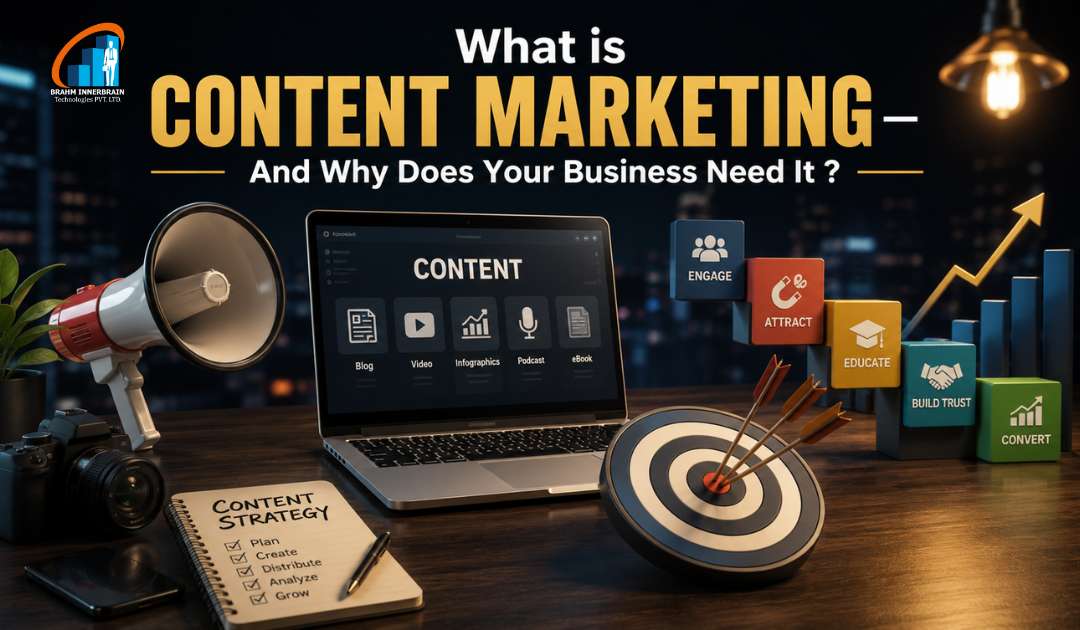
The Simple Answer
Content marketing means regularly putting out helpful, relevant information — through blog posts, videos, social media, or guides — that genuinely assists your audience in solving problems or making informed decisions. The goal isn’t to push a sale directly. It’s to earn trust by being useful, so that when someone is ready to make a purchase, your business is already the one they think of first.
Put simply: instead of asking people to buy, you give them a reason to trust you first.
How Content Marketing Actually Works
Here’s a practical example. A business owner in Ahmedabad wants to build a website. They Google “how much does a website cost in India” and land on a detailed blog post from a local web development company — one that clearly breaks down pricing, explains what affects cost, and tells them what to watch out for when hiring a developer.
No sale has happened yet. But that company has already done something valuable — they’ve answered a real question, demonstrated their knowledge, and positioned themselves as a credible option. When that business owner is ready to move forward, that company is who they call. That’s content marketing at work.
Types of Content Marketing
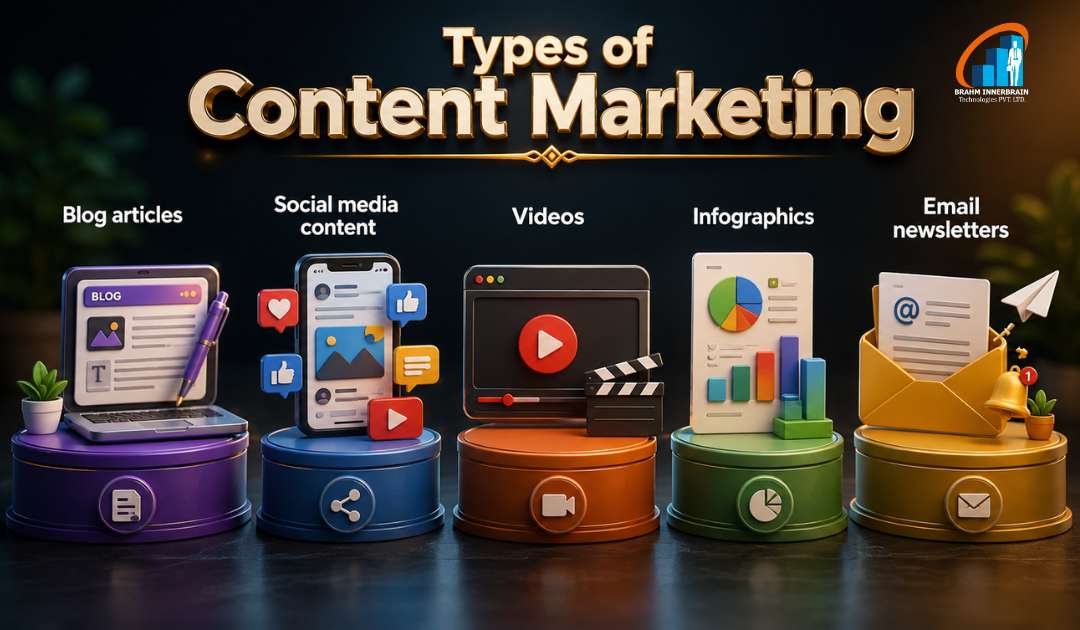
Content marketing goes well beyond just writing blog posts — it spans several formats depending on where your audience spends their time:
- Blog articles — well-researched posts that address the specific questions your potential customers are typing into Google
- Social media content — posts, reels, and stories designed to educate or engage while keeping your brand consistently visible
- Videos — explainers, tutorials, or behind-the-scenes clips that humanize your brand and build connection
- Infographics — visually presented information that’s easy to absorb and share
- Email newsletters — regular touchpoints that keep your existing audience informed and engaged
Why Content Marketing Outperforms Traditional Advertising
Traditional advertising interrupts — banner ads, pop-ups, and cold calls demand attention without offering much in return. Content marketing takes the opposite approach: it earns attention by actually being worth the reader’s time.
The other major advantage is staying power. A paid ad disappears the moment your budget runs out. A genuinely helpful blog post or video, on the other hand, can keep bringing in visitors and generating leads long after it was first published — with no extra spend required.
What Content Marketing Can Do for Your Business
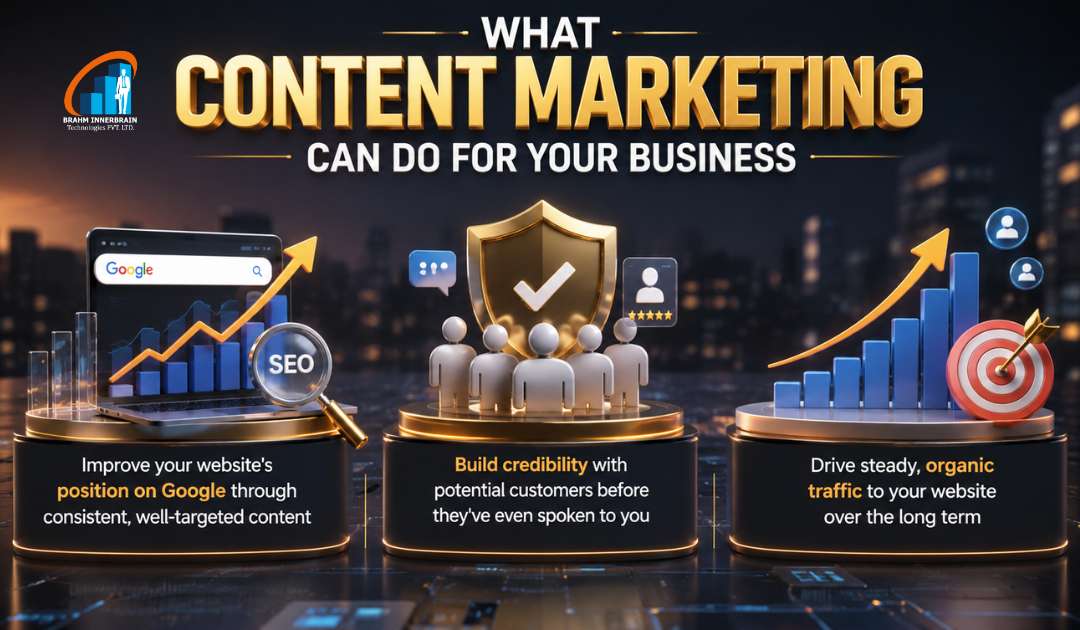
- Improve your website’s position on Google through consistent, well-targeted content
- Build credibility with potential customers before they’ve even spoken to you
- Keep your brand present on social media without depending entirely on paid campaigns
- Drive steady, organic traffic to your website over the long term
- Establish your business as a knowledgeable, trustworthy option in your industry
Frequently Asked Questions
Q1. How long does it take for content marketing to show results? Content marketing is a long-term investment — most businesses begin seeing meaningful results within 3 to 6 months of consistent effort. Unlike paid ads, the results tend to grow and compound over time.
Q2. Do I need a blog on my website for content marketing? A blog is a strong starting point, particularly for SEO. But social media content, videos, and email newsletters all count as content marketing too. The right mix depends on your audience and goals.
Q3. How often should I publish new content? Consistency matters far more than volume. One well-researched, genuinely useful piece per week tends to deliver better results than several rushed, thin posts.
Q4. Can a small business do content marketing without a large team? Absolutely. Many small businesses build real momentum with just a blog and a consistent social media presence. The key is having a clear plan and following through on it regularly.
Ready to Start Using Content to Grow Your Business?
When done consistently, content marketing turns your website and social media into assets that keep working for your business — attracting new customers without depending entirely on paid advertising.
Get in touch with Brahm Innerbrain Technologies to put together a content strategy built around your business and audience.