

Growth is the primary goal of every business, whether it is a startup, a small enterprise, or a large corporation. However, growth does not happen randomly; it requires a clear and well-defined strategy. One of the most widely used frameworks to understand business growth options was introduced by Igor Ansoff. This framework, commonly known as the Ansoff Growth Matrix, explains four core strategies of growth: Market Penetration, Product Development, Market Development, and Diversification. Each strategy represents a different level of risk and opportunity. Let’s explore these four strategies in detail.
Market Penetration
Market penetration is the most basic and least risky growth strategy. In this approach, a business focuses on selling more of its existing products or services to its current market. The product remains the same, and the target audience also remains unchanged. Growth is achieved by increasing market share.
Common tactics for market penetration include competitive pricing, discounts, loyalty programs, increased advertising, and improving distribution channels. For example, a brand may run promotional campaigns to encourage existing customers to buy more frequently or switch from competitors. Since the company already understands the product and the market, the risk involved is relatively low. However, growth potential may be limited if the market is already saturated.

Product Development
Product development focuses on introducing new or improved products to an existing market. In this strategy, businesses leverage their current customer base but offer something new to meet evolving needs or preferences. This could include product upgrades, new features, variations, or entirely new products that complement the existing lineup.
For instance, a smartphone company may launch a new model with better performance or innovative features for its loyal customers. The advantage of product development is that businesses already have market knowledge and customer trust. However, the risk is higher than market penetration because new products require research, development, testing, and investment. If the product fails to meet customer expectations, it can lead to losses.
Market Development
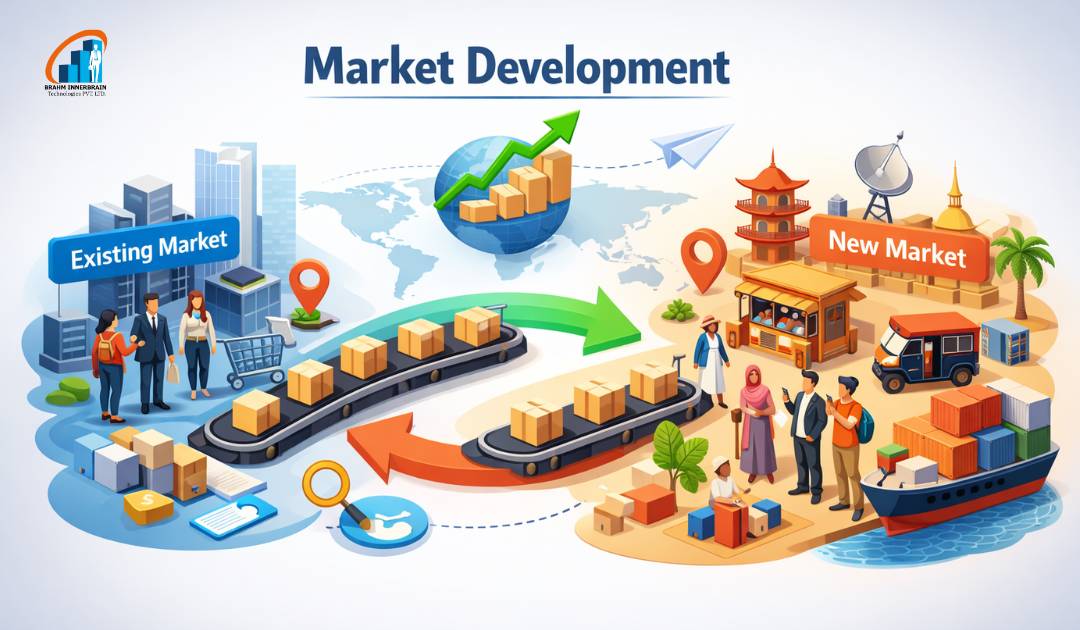
Market development involves taking an existing product and introducing it to a new market. The product remains the same, but the audience changes. This new market could be a different geographic location, a new demographic group, or even a new platform or distribution channel.
For example, a company that sells products in one country may expand internationally, or a brand targeting adults may reposition its product for younger consumers. Market development offers significant growth opportunities, especially when the existing market becomes mature or stagnant. However, the challenge lies in understanding the new market’s culture, preferences, regulations, and competition. Without proper research and adaptation, this strategy can be risky.
Diversification
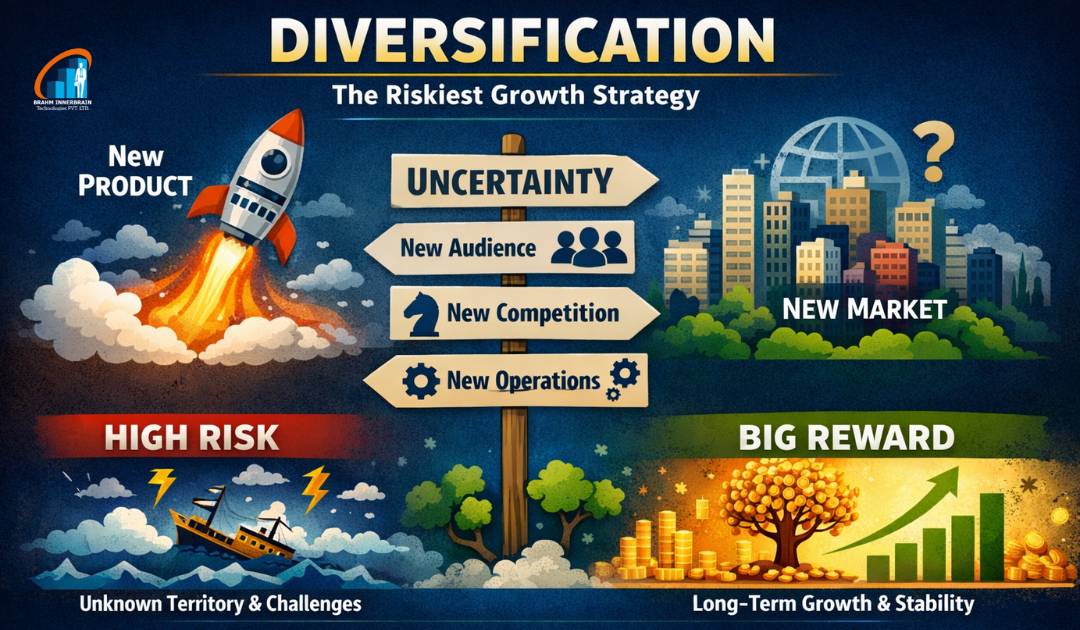
Diversification is the most complex and riskiest growth strategy. It involves introducing a completely new product to a completely new market. In this case, the business moves beyond its existing expertise and customer base.
Diversification can be related or unrelated. Related diversification means the new product or market has some connection to the existing business, such as a fitness brand launching health supplements. Unrelated diversification, on the other hand, involves entering a completely different industry. While diversification offers the potential for high rewards and long-term stability, it also carries the highest risk due to lack of experience, high investment, and uncertainty.
Conclusion
The four strategies of growth—Market Penetration, Product Development, Market Development, and Diversification—provide a clear roadmap for businesses to expand systematically. Each strategy comes with its own level of risk, cost, and potential return. Choosing the right strategy depends on factors such as business goals, resources, market conditions, and risk tolerance. Successful organizations often use a combination of these strategies at different stages of their growth journey. Understanding these four strategies helps businesses make informed decisions and pursue sustainable, long-term growth.