
Introduction
IoT, or the Internet of Things, is transforming the way we connect with technology and engage with our surroundings. In simple terms, IoT is a network of everyday physical objects—such as household appliances, vehicles, industrial machines, and wearable devices—equipped with sensors, software, and internet connectivity. These smart objects can gather and share information without requiring constant human control.
What was once imagined only in science fiction has become a routine part of everyday life. From automated lights in homes to advanced systems in factories, IoT is reshaping industries and lifestyles. With better connectivity, affordable sensors, and powerful data processing tools, IoT is rapidly becoming one of the most influential technologies of the modern era.
How IoT Works
The functioning of IoT can be broken down into a few core components:
- Smart Devices
Everyday objects enhanced with chips, sensors, and communication hardware, such as smartwatches, thermostats, or connected cars. - Sensors
These detect specific conditions—like motion, temperature, light, or humidity—and turn them into measurable data. - Network Connectivity
IoT devices link to the internet through Wi-Fi, Bluetooth, 5G, or other communication methods, enabling real-time data exchange. - Data Processing
Information collected by devices is sent to servers or cloud platforms, where it’s analyzed. Based on the results, the system can trigger automatic actions or send notifications to users.
For instance, a smart irrigation system uses moisture sensors to determine when plants need water, automatically turning on sprinklers when necessary.
Essential Components of IoT Ecosystem
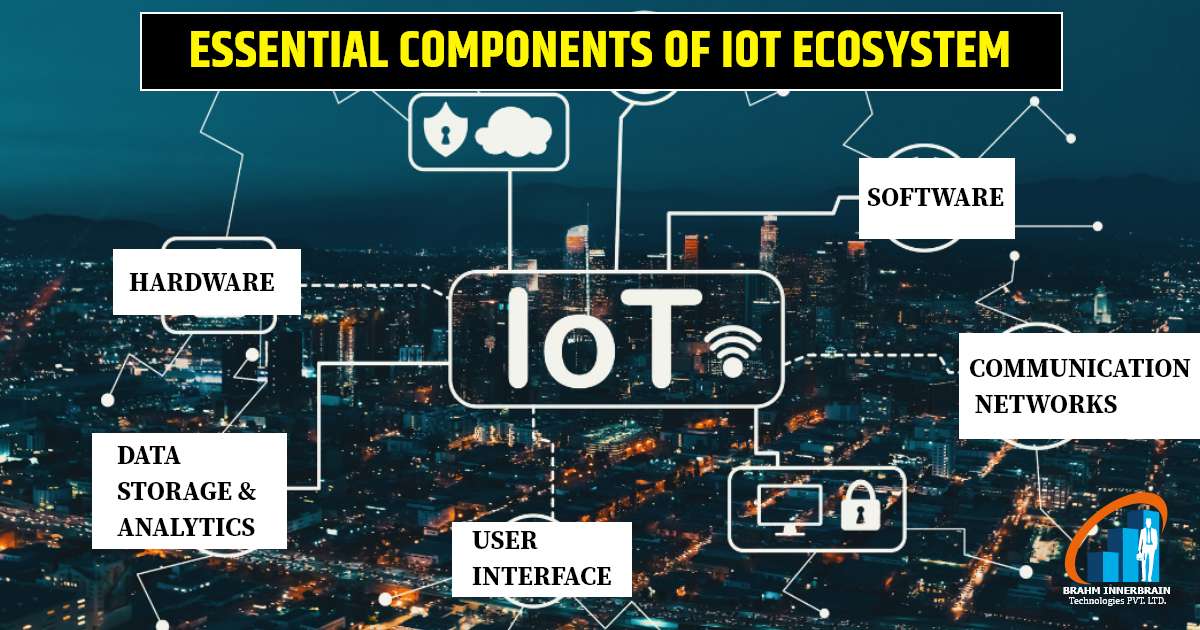
- Hardware: Includes microcontrollers, chips, and the sensors embedded in devices.
- Software: Applications and systems that control devices and manage collected data.
- Communication Networks: The infrastructure that enables data transfer between devices and servers.
- Data Storage & Analytics: Systems that store vast amounts of data and make sense of it through advanced analytics.
- User Interface: Dashboards and mobile apps that allow users to interact with and control devices.
Real-World Applications of IoT
- Smart Homes
Voice-controlled assistants, connected lighting systems, and smart thermostats help make homes energy-efficient and more comfortable. - Healthcare
Wearable medical devices track vital signs like heart rate and oxygen levels, transmitting data directly to healthcare professionals. - Agriculture
Farmers use IoT-based soil and climate sensors to improve crop yield and reduce water usage. - Industrial IoT (IIoT)
Manufacturing machines equipped with sensors can monitor themselves, predict breakdowns, and reduce downtime. - Transportation & Logistics
IoT platforms using GPS improve delivery planning and oversee the health of transport vehicles. - Smart Cities
IoT applications manage streetlights, control traffic flow, and monitor pollution to create sustainable urban environments.
Benefits of IoT
- Automation: Reduces manual effort and speeds up processes.
- Data Insights: Helps businesses and individuals make better decisions through real-time data.
- Cost Savings: Predictive maintenance and resource optimization lower expenses.
- Convenience: Simplifies everyday tasks for users.
- Enhanced Safety: Provides real-time monitoring and emergency alerts.
Challenges and Concerns
- Security Threats: Devices can be vulnerable to hacking.
- Privacy Risks: Sensitive data may be exposed or misused.
- Compatibility Issues: Different device brands may not work seamlessly together.
- High Setup Costs: Large-scale IoT systems require significant initial investment.
- Data Management: Handling large volumes of continuous data can be complex.
Future Outlook for IoT
- 5G Technology: Will enable faster, more reliable device connectivity.
- Edge Computing: Processes data locally for quicker decision-making.
- AI & Machine Learning: Will allow IoT systems to predict and act without human intervention.
- Blockchain Integration: Enhances security and transparency in data exchange.
- Sustainable Solutions: IoT will be used to monitor resources and minimize environmental impact.
Conclusion
The Internet of Things is no longer a futuristic dream—it’s already here, shaping how we live, work, and communicate. By blending sensors, software, and connectivity, IoT allows devices to share information and act intelligently, often without our direct input. Security and privacy issues still exist, but continuous advancements in technology are working to resolve them.
IoT’s true potential lies in connecting not just devices, but also people, processes, and systems in ways that improve efficiency, safety, and quality of life. As the technology evolves, it promises a future where the physical and digital worlds work together seamlessly, creating opportunities that are only just beginning to unfold.