
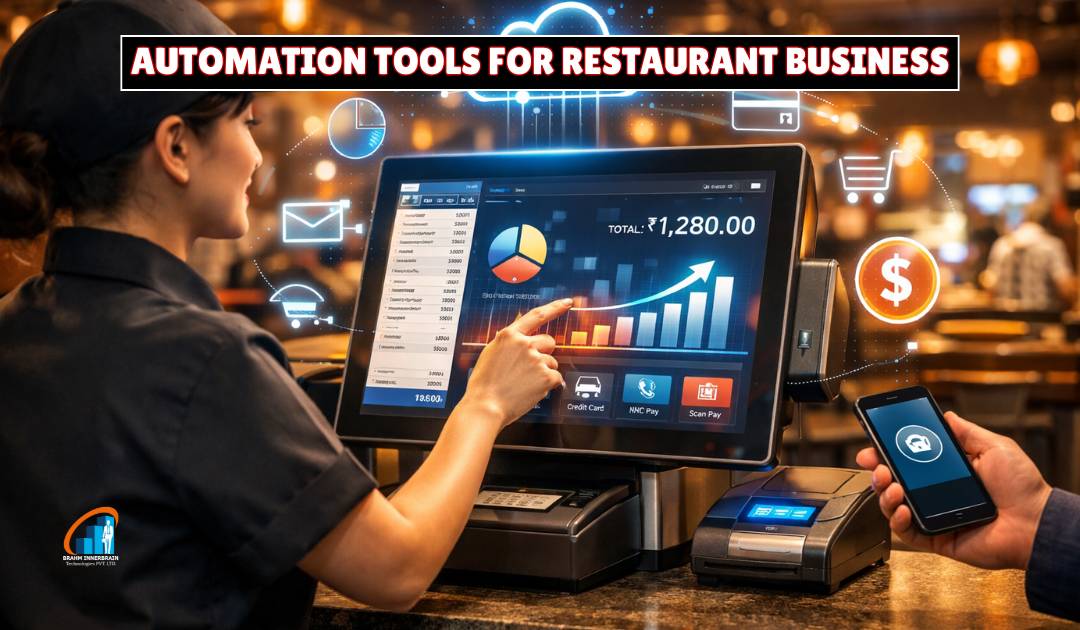
The restaurant industry is becoming more competitive and technology-driven every year. To manage operations smoothly, reduce costs, and improve customer satisfaction, many restaurants are adopting automation tools. From taking orders to managing inventory, automation is transforming how modern restaurants operate.
What is Restaurant Automation?
Restaurant automation refers to the use of technology and software tools to streamline and automate daily restaurant operations. Instead of handling tasks manually, restaurants use digital systems to improve efficiency, accuracy, and speed.
Automation can cover various areas such as billing, kitchen management, online ordering, table reservations, inventory tracking, employee scheduling, and customer relationship management (CRM).
For example, a POS (Point of Sale) system automatically records orders, calculates bills, tracks sales data, and updates inventory in real time. This reduces human errors and saves time. Restaurant automation not only improves operational efficiency but also enhances the customer experience by offering faster service and personalized interactions.
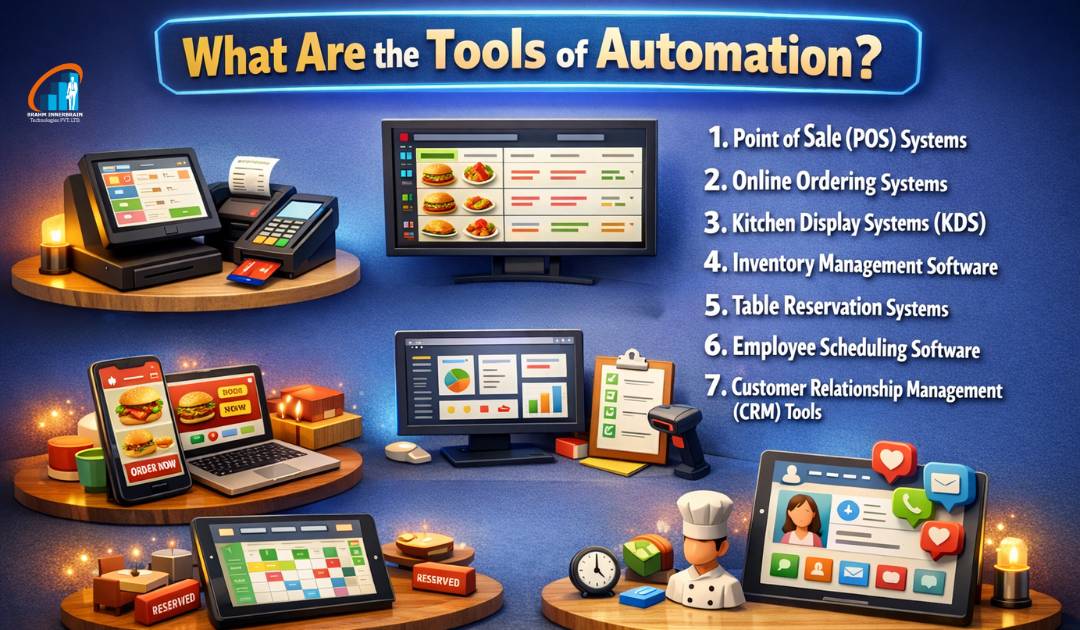
What Are the Tools of Automation?
There are several automation tools used in the restaurant business. Each tool plays a specific role in managing different operations:
1. Point of Sale (POS) Systems
A POS system is the backbone of restaurant automation. It manages billing, order processing, sales tracking, and payment handling. Popular POS systems like Square, Toast, and Lightspeed provide cloud-based solutions that help restaurants monitor sales and performance in real time.
2. Online Ordering Systems
Online ordering tools allow customers to place orders through websites or mobile apps. Platforms like Zomato and Swiggy integrate directly with restaurant systems, reducing manual order entry and improving accuracy.
3. Kitchen Display Systems (KDS)
A Kitchen Display System replaces paper tickets with digital screens in the kitchen. Orders are automatically displayed, helping kitchen staff prepare food efficiently and reduce mistakes.
4. Inventory Management Software
Inventory tools track stock levels automatically. When stock runs low, the system sends alerts or generates purchase orders. This helps reduce wastage and avoid overstocking.
5. Table Reservation Systems
Reservation tools allow customers to book tables online. Systems like OpenTable manage bookings, reduce waiting times, and improve table turnover rates.
6. Employee Scheduling Software
Automation tools help managers schedule shifts, track attendance, and calculate payroll efficiently. This reduces scheduling conflicts and improves staff productivity.
7. Customer Relationship Management (CRM) Tools
CRM software collects customer data such as order history and preferences. Restaurants can use this data to send personalized offers, loyalty rewards, and promotional messages.
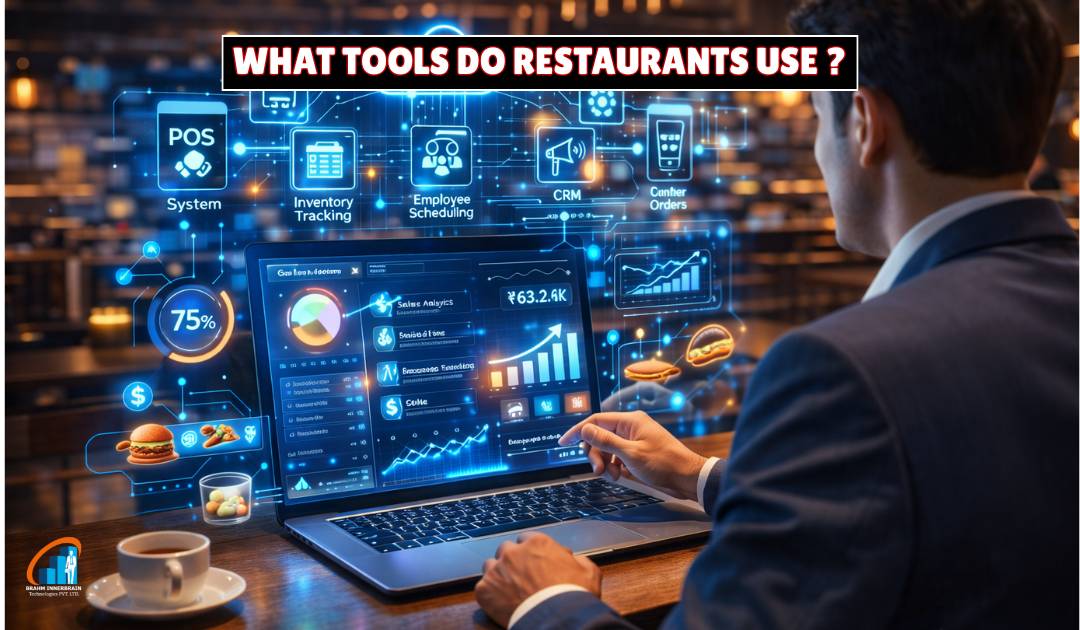
What Tools Do Restaurants Use?
Modern restaurants use a combination of tools depending on their size and type. Small cafes may use a basic POS system and online ordering platform, while large restaurant chains use advanced automation systems integrated across multiple locations.
Cloud-based POS systems are widely used because they allow owners to monitor sales and operations remotely. Food delivery integrations are essential in today’s market, especially in cities like Ahmedabad, where online food delivery demand is growing rapidly.
Self-ordering kiosks and QR-code-based digital menus are also becoming popular. Customers can scan a QR code, browse the menu, and place orders directly from their smartphones. This reduces the need for additional staff and speeds up service.
Robotic process automation and AI-based tools are also emerging trends. Some restaurants use chatbots to handle online inquiries and automated marketing tools to send promotions.
Conclusion
Restaurant automation is no longer optional—it is becoming a necessity. Automation tools help reduce errors, save time, cut costs, and improve customer satisfaction. From POS systems to inventory management and online ordering platforms, technology enables restaurants to operate more efficiently and competitively.
As the food industry continues to evolve, restaurants that adopt automation tools will be better positioned for growth and long-term success.